I almost clicked “Approve” on a malicious approval a while back. It was one of those gut-check moments—my instinct said somethin’ wasn’t right, and luckily I listened. That tiny pause saved me a few hundred dollars and a whole lot of headache. Seriously, browser extension wallets are awesome for usability, but they also concentrate risk into one place. So, here’s my take: we need smarter defaults, clearer UX, and better tools to reduce accidental exposure—especially for everyday DeFi users.
Okay, so check this out—browser wallets are the bridge between your keys and the wild west of DeFi apps. That convenience comes with several recurring threat patterns: phishing dapps that mimic interfaces, malicious scripts injected by compromised pages, RPC manipulation that hides chain context, and the old approval fatigue where users just click through multi-approval prompts without understanding the scope. On one hand, users want one-click swaps and seamless UX; on the other, that same friction reduction makes catastrophic mistakes much easier. Initially I thought better education would solve it, but then realized UX and protocol-level mitigations matter way more.
Let’s walk through concrete threats and practical defenses. First: signature and approval scope. Many tokens and contracts ask for broad allowances like “approve unlimited.” If a user grants that, a malicious contract (or a compromised dapp) can sweep tokens at any time. The simplest defense is tooling that surfaces exactly what you’re approving—human-readable summaries, limits by amount, and revocation shortcuts. Also: per-site account separation. If every dapp connects to the same global account, a single compromised site can trigger multiple approvals. Segment accounts by site or purpose; that reduces blast radius.
Another issue is transaction abstraction. DeFi UX loves to abstract away gas, chains, and nonces. That’s convenient but dangerous. Somethin’ as subtle as an RPC that lies about chainId can trick a user into signing a transaction that executes somewhere else. A good wallet should show precise chain context, verify chain IDs, and ideally provide transaction previews that translate low-level calldata into readable intent—”this sends 5 ETH to X for swap” rather than “function 0x12ab…”.
Hardware wallet integration remains one of the best mitigations. When the signing key never leaves a secure element, the attack surface drops dramatically. That said, hardware alone isn’t a panacea—users can still sign malicious payloads if the UI is opaque. So combine hardware with clear transaction summaries and policy checks.
What to look for in a browser extension wallet
If you’re picking a wallet, don’t pick it on looks alone. Look for these features: open-source codebase (so the community can inspect), formal audits, hardware-wallet support, per-dapp isolation, fine-grained approval controls (amount and time limits), transaction simulation (to show what a tx will do before you sign), and clear domain binding so the wallet shows exactly which site is asking for access. A wallet that nudges users to create multiple accounts or to use read-only accounts for high-risk sites will save you pain.
I’ll be honest—some wallets tick some boxes and not others. That part bugs me. For instance, transaction simulation is amazing when it works, but it’s only as good as the simulator and RPCs it relies on. On the bright side, tools are converging: better approval UIs, automatic revoke suggestions, and patterns like “allowance by action” (approve only for a specific swap) make a real difference. I’m biased, but I think per-site session accounts are an underrated feature—they change the threat model from “everything exposed” to “limited exposure.”
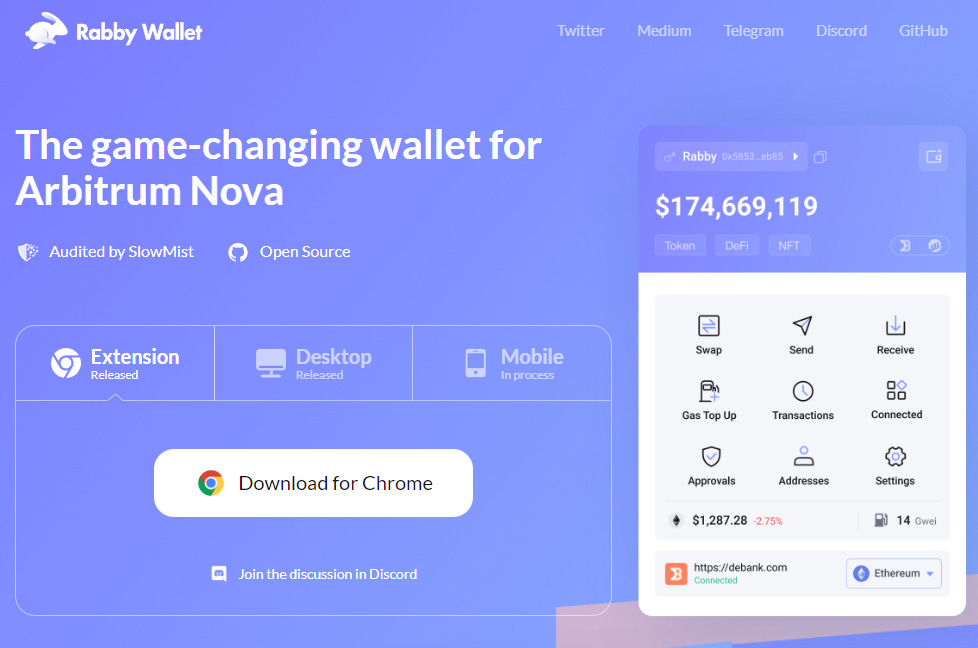
One wallet I’ve used and recommend checking out is rabby wallet. It focuses on more explicit transaction details and better approval management, and supports hardware integration and multi-chain workflows. I like that it tries to make approvals visible and manageable; though I’m not 100% sure it perfectly fits every user’s threat model, it’s a solid option for users who care about security without sacrificing UX.
Here are some practical habits that actually help, not just buzzwords:
- Use separate accounts: one for big holdings, one for everyday dapp use, and a cold or hardware account for long-term storage.
- Revoke approvals regularly. There are tools for that, but make it routine—monthly at least.
- Don’t autocomplete seed phrases or private keys in the browser. Ever. If a site asks for it, it’s a scam.
- Review transaction details slowly. If the wallet UI shows “function bytes,” take two extra breaths and ask for a better preview or refuse.
- Prefer wallets with explicit domain binding—if the wallet shows the origin, you can spot spoofing attempts faster.
On one hand, protocol-level fixes (like ERC standards allowing scoped approvals) are promising, though adoption is slow. On the other, lightweight UX improvements in wallets can provide immediate gains. It’s not either/or; it’s both. Wallet developers should push for better defaults: deny-by-default approvals, warnings for cross-chain anomalies, and templates that translate calldata into plain language. The industry moves fast, though, and sometimes standards lag behind real-world attacks—so users and wallet teams must iterate together.
(Oh, and by the way…) if you’re running a browser wallet, keep your extension updated. Updates often include security fixes. I know—it feels obvious but a surprising number of incidents stem from outdated extensions or compromised browser profiles.
Common questions about browser wallet security
Is a browser extension wallet safe enough for large sums?
Short answer: not ideal. For large holdings, use a hardware wallet or cold storage. Extensions are convenient for active trading and DeFi interactions, but they expose your keys to the browser environment. If you must keep significant funds accessible, split them—use a hot wallet for active positions and a hardware/cold wallet for the bulk.
How do I spot a phishing dapp?
Look at the URL and TLS indicator, check the domain carefully for subtle typos, and prefer bookmarks or direct links over search results. Also, inspect the connection request in your wallet: which origin is it? If the wallet shows an unfamiliar domain or the UI looks different, disconnect and verify through other channels (e.g., official social media or docs).
Wrapping up—well, not wrap up like some neat bow; more like circling back. I started with a near-miss and a small scare, and I end with a practical belief: better UX paired with strong cryptographic practices will reduce most everyday losses. Wallets like rabby wallet are part of that evolution—they push transparency and permission controls in ways that matter. So slow down, check the details, and treat your browser wallet like a live instrument: it can do amazing things, but played carelessly it can break.